
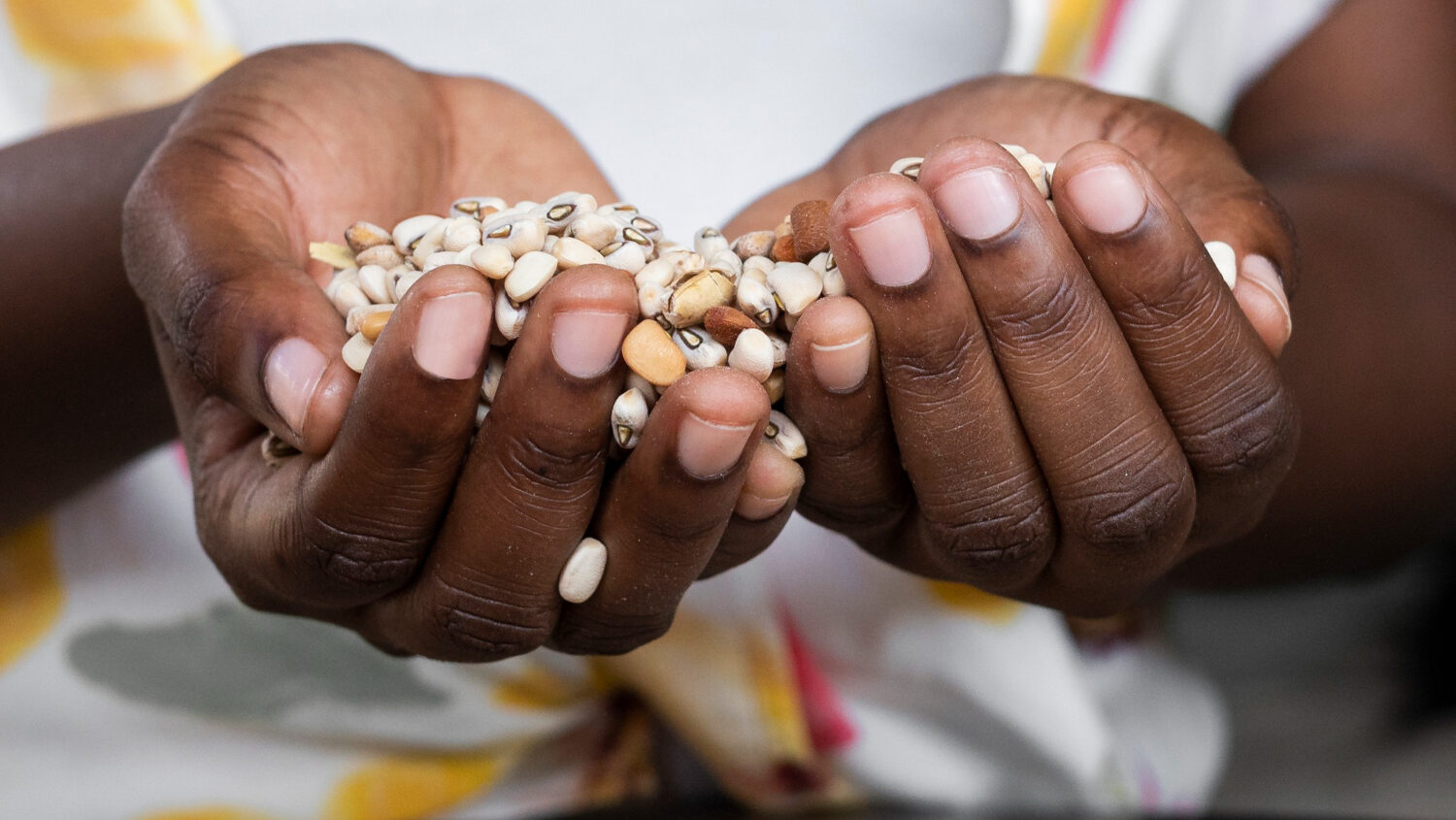

456 million hectares of farmland: a resource to be sustainably developed in the interest of food sovereignty.

EXPERTISE
A challenge for the agricultural and food sectors.
Our team attended a conference on the commons in Africa titled “What Public Policies for the Commons?”, organized by the AFD (French Development Agency) in Paris. Beyond public policy, this event highlighted concepts that shed light on agricultural development in Africa and the economic development of the entire continent. The concepts discussed draw in particular on the book *Africa in the Commons*.
The Commons in Africa: Societal and Environmental Pillars.
A commons is defined as a shared resource that is collectively managed and maintained by all the individuals or communities that have access to it. These individuals sharethe responsibility to preserve this resource. The community thus establishes governance rules with the aim of preserving and ensuring the long-term sustainability of these resources. These rules may involve the creation of a governance structure responsible for ensuring that access and obligations are respected.
A societal value
Agriculture and the Commons in Africa.
Despite its gradual urbanization, Africa remains predominantly rural. With approximately 456 million hectares of available agricultural land, a large portion consists of forests and areas requiring conservation.Agriculture, which employed 53% of the workforce in 2019, continues to dominate the job market.
Land and natural resources thus form the economic foundation for millions of people in rural areas, directly influencing issues of food sovereignty, social peace, and economic development.
The management of common resources in Africa is therefore a key issue for the agricultural sector as it seeks to meet the challenge of feeding the entire population amid the continent’srapid population growth over the coming decades.
Increasing pressure on the “commons”
The challenge of balancing food sovereignty and sustainability.
- Food sovereignty is a challenge for the African continent, and the commons play a central role. Resources must be protected from land grabbing, deforestation, and climate change, against a backdrop of rapid population growth.
- To address this challenge, it is necessary to promote agricultural development projects at all levels. Beyond funding, the implementation of public policies and local initiatives aimed at supporting short supply chains and local markets can strengthen food sovereignty, while ensuring that production directly benefits local communities.
- However, these projects must include the promotion of sustainable agricultural practices, such as agroecology or regenerative agriculture. These methods not only maximize land productivity but also promote biodiversity and the resilience of food systems in the face of climate change.