Why Should We Care About the Sovereignty of French Companies?
Why Should We Care About the Sovereignty of French Companies?
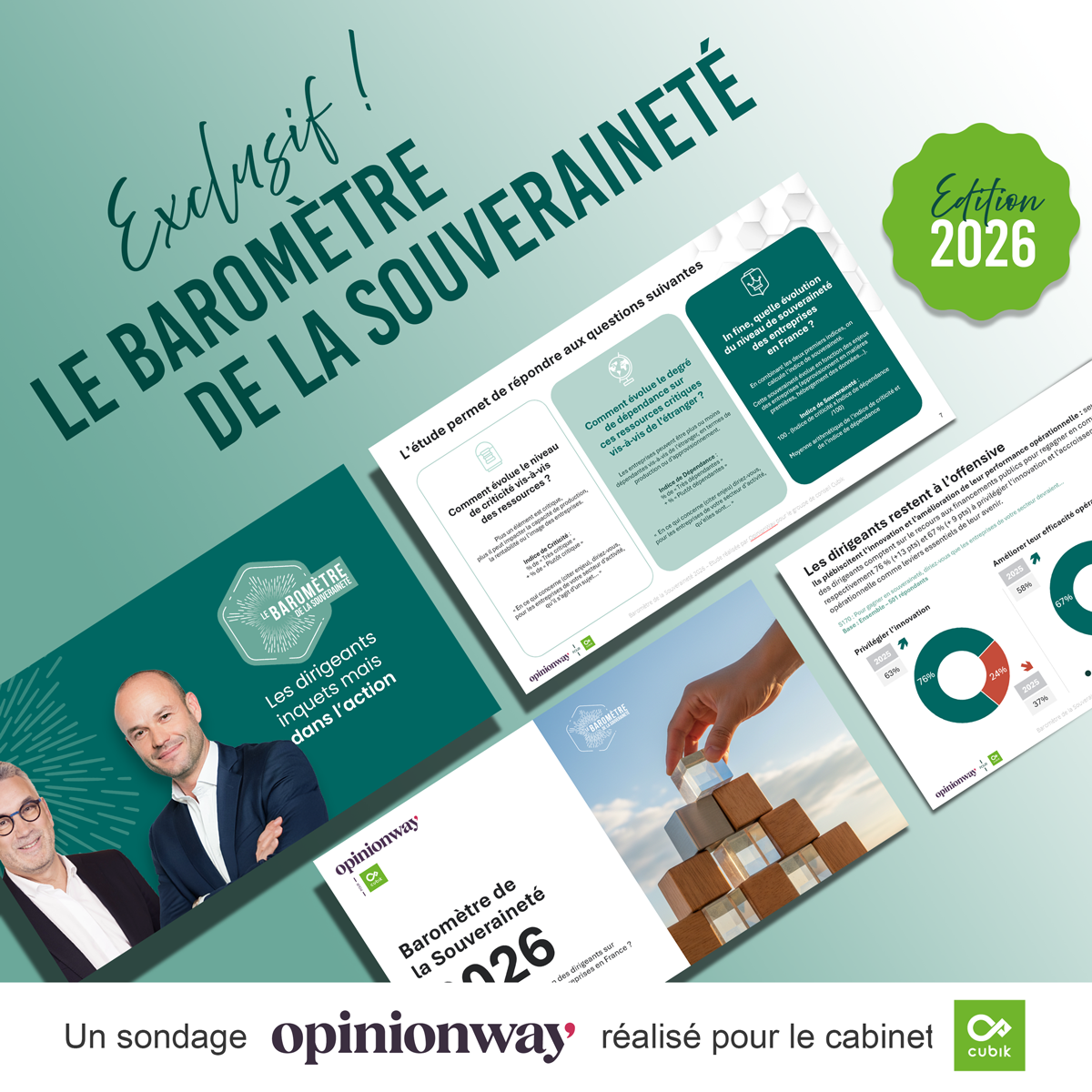
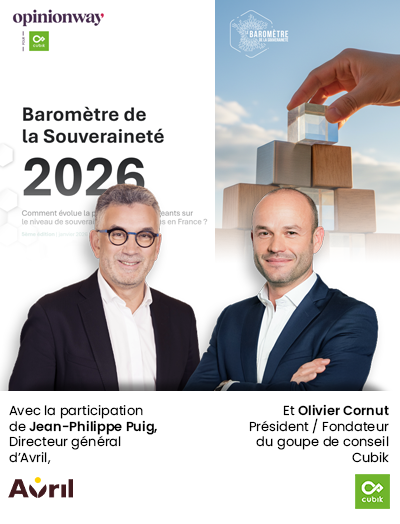
Created in 2021 amid mask and vaccine shortages during the health crisis, the Sovereignty Barometer has shed light on issues that have long been underestimated:
- For the past five years, Cubik has conducted an annual analysis of the strategic challenges facing companies, assessing in particular the criticality of resources, their dependence on foreign sources, and the dynamics and obstacles associated with reshoring.
- The results of this study reflect the impact of a series of crises: the pandemic, the war in Ukraine, tensions over raw materials and agricultural commodities, shortages, soaring energy prices, and inflation…
- In 2026, as geopolitical tensions persist, political instability takes hold in France, and artificial intelligence transforms economic and social prospects, what trends are emerging this year?
The three key indicators measured each year
Resource Criticality
The more critical an element is, the greater its potential impact on profitability, the ability to maintain production, or the company’s public image.
Dependence on Foreign Countries
A company may be more or less dependent on foreign sources for some of its critical resources, whether in terms of production or supply.
Sovereignty Index
Combining the criticality and dependency indices makes it possible to calculate a sovereignty index: this sovereignty varies depending on the challenges faced by companies (supply of goods and semi-finished products, access to R&D resources, etc.).
Factors that have remained constant since the launch of our study (2021)
Gaining sovereignty is a long-term process, but entrepreneurs set their priorities based on the short term. They are therefore highly sensitive to factors such as taxation, energy costs, labor costs, and market growth in the markets where they operate.
Sovereignty is an illusion: the business world is inherently interdependent in terms of its value chain and geographic scope. The larger a company is, the more interdependent it is. It is therefore essential to embrace these interdependencies: analyzing high-risk supply chains, diversifying supply sources (geosourcing), and forming new alliances (friendshoring) remain top priorities.
Innovation and improving operational performance (process improvement, cost reduction, etc.) are two imperatives for virtually all companies.
Two key factors stand out regarding France’s appeal:
- Energy and labor costs,
- Reducing regulatory burdens and tax instability.
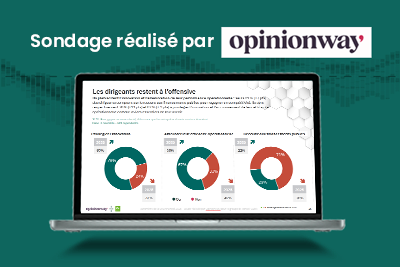
A study conducted with OpinionWay
Each year, the OpinionWay Institute surveys more than 500 executives (senior management, members of the executive committee, etc.) from companies that are representative of the French economy (by sector and by size).
Sovereignty, as measured by various indicators (criticality, dependence on foreign sources), evolves in line with companies’ strategic priorities, whether these involve the procurement of raw materials, data hosting, or other major challenges:
- How has the criticality level changed by resource type?
The study is based on the following premise: the more critical an element is, the greater its potential impact on the growth, profitability, or reputation of the companies involved. - To what extent do we depend on other countries for these critical resources?
Depending on the type of resources, companies may be more or less dependent on foreign sources (in terms of supply or production, for example).
In the News
- Watch the video BFMTV.com >
- Read the article on Les Echos.fr >
- Read the article on Le Figaro.fr >
- Read the article on Forbes.fr >
- Read the article on La Tribune.fr >



Download the Sovereignty Barometer