
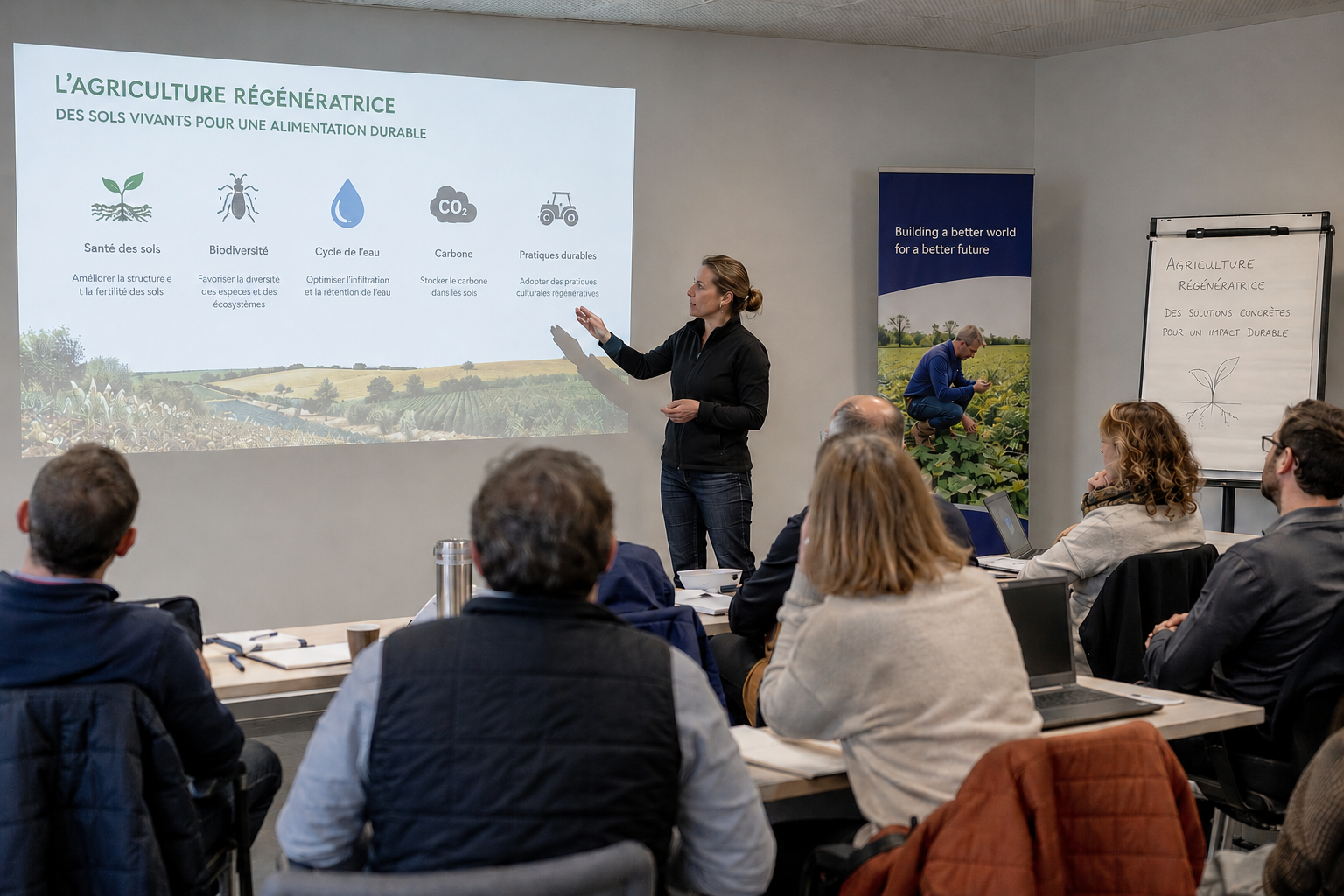

A shared culture of Regenerative Agriculture fostered among Mars Pet Nutrition’s teams and suppliers.

USE CASES
Train teams and suppliers to accelerate the transition to Regenerative Agriculture.
The transition to regenerative agricultural systems has become a key driver for reducing the carbon footprint, restoring soils, and securing supply chains in the long term. Training both internal teams and suppliers simultaneously helps accelerate this transformation and ensures a consistent and sustainable scaling-up.
Mission Objective
Ensure that Mars’ internal teams and suppliers develop the necessary skills to support the company’s decarbonization efforts through the adoption of regenerative agriculture practices.
Our Approach
To achieve this goal, we have:
- Developed comprehensive training modules covering the fundamentals of regenerative agriculture: soil health, water management, biodiversity, carbon, sustainable farming practices…
- Led training sessions tailored to different groups: internal teams, partners, and upstream suppliers.
- Engaged stakeholders in the scaling-up process by highlighting concrete strategies applicable to the group’s strategic agricultural sectors.
- Supported the operational integration of regenerative practices into supply chains, using simple tools and benchmarks to guide action on the ground.
Accelerating the regenerative transition
This approach has helped establish a shared understanding of regenerative principles, break down silos between departments and suppliers, and engage all stakeholders in reducing carbon impact through concrete and measurable agricultural actions.