
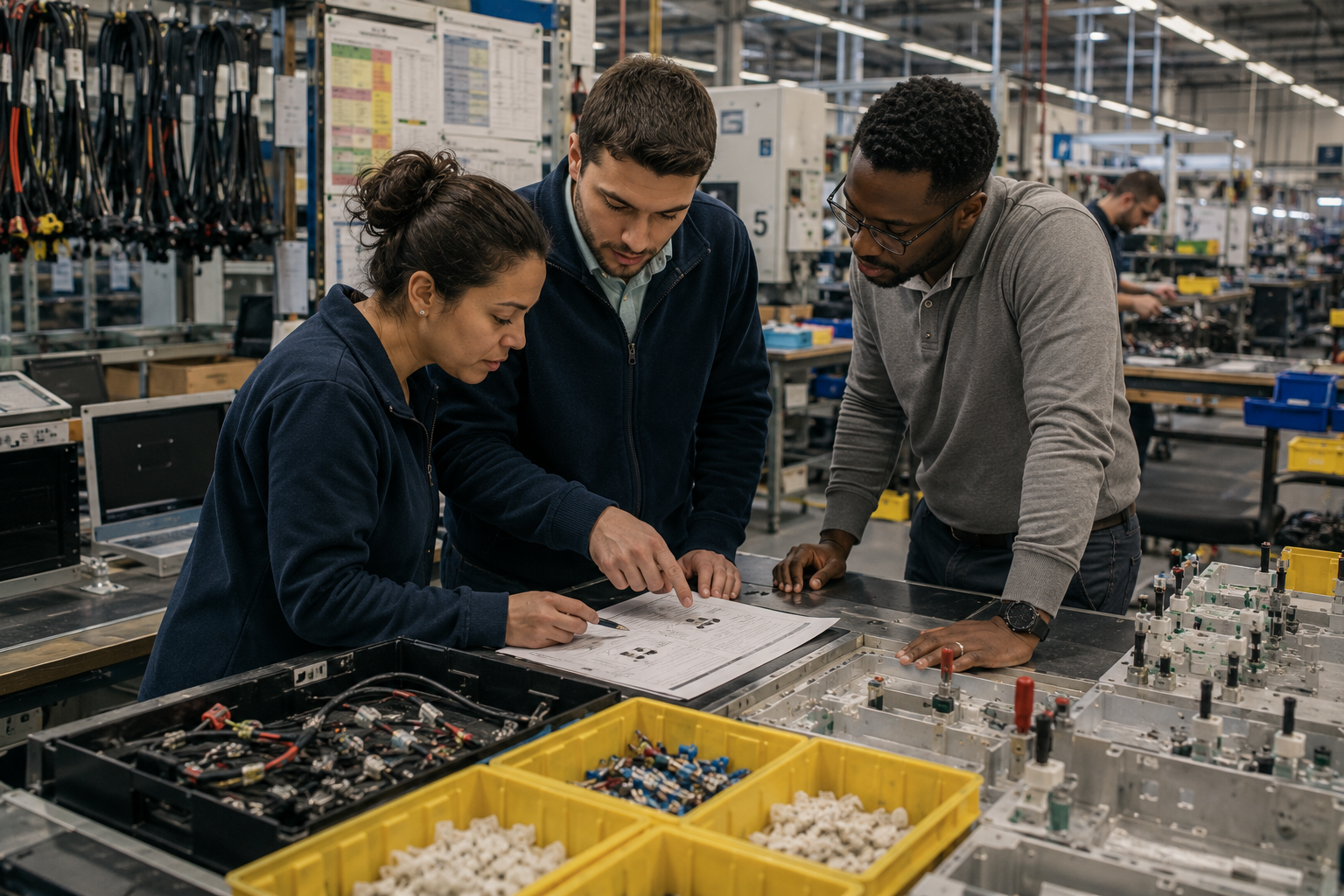

9 hours saved per production run by returning to the standard production process.

USE CASES
Optimize the industrialization of small production runs through structured and collaborative management.
In many workshops, small-batch production can quickly become a challenge in terms of competitiveness and meeting time standards. Discrepancies between planned and actual times result in financial losses and affect the workshop’s overall performance. To address this, it is essential to implement a robust, structured, and collaborative approach to the industrialization of new products.
Project Objectives
In the workshop specializing in wiring harnesses and panels, small-batch products were not competitive. The main problems identified were:
-
Significant discrepancies between planned standard times and actual time spent.
-
Insufficient communication and follow-up regarding information shared with production, which made it difficult to meet productivity targets.
The goal was clear: to bring the productivity of the pilot products up to the defined standards and permanently eliminate variances through a robust process and collective management.
The Approach
-
Process Diagnostics
-
Process analysis and identification of pain points using the SIPOC method.
-
Detailed mapping of accounting processes using the swimlane method to visualize the initial situation.
-
-
Short-Term Action Plan
-
Implementation of the quick wins incorporated into the management team’s control room.
-
-
Establishing Weekly Routines
-
15-minute POP per team: leading the activity, tracking financial KPIs, and dynamically planning actions.
-
30-minute POP in the Financial Control Department: overall management, team coordination, and monitoring of key projects.
-
-
Development of Metrics and Management Tools
-
Accounting KPIs.
-
Dynamic Action Planning.
-
Tracking performance and sharing best practices.
-
The results obtained
Implementing this approach has made it possible to:
-
Return to standard production levels for the pilot product, with an estimated time savings of 9 hours per production run.
-
Identification and tracking of 35 initiatives, with 100% of key initiatives completed thanks to enhanced management and the reorganization of tools and methods (trolley, WIN/WIN process, Obeya).
-
Establishment of a clear, standardized process with defined milestones and regular monitoring of activities.
-
Sustainable improvement in productivity for small-batch production through a methodology that can be applied to other products.
This approach demonstrates that the industrialization of new product lines can be optimized over the long term when teams have a structured framework, visual management tools, and tailored support.