
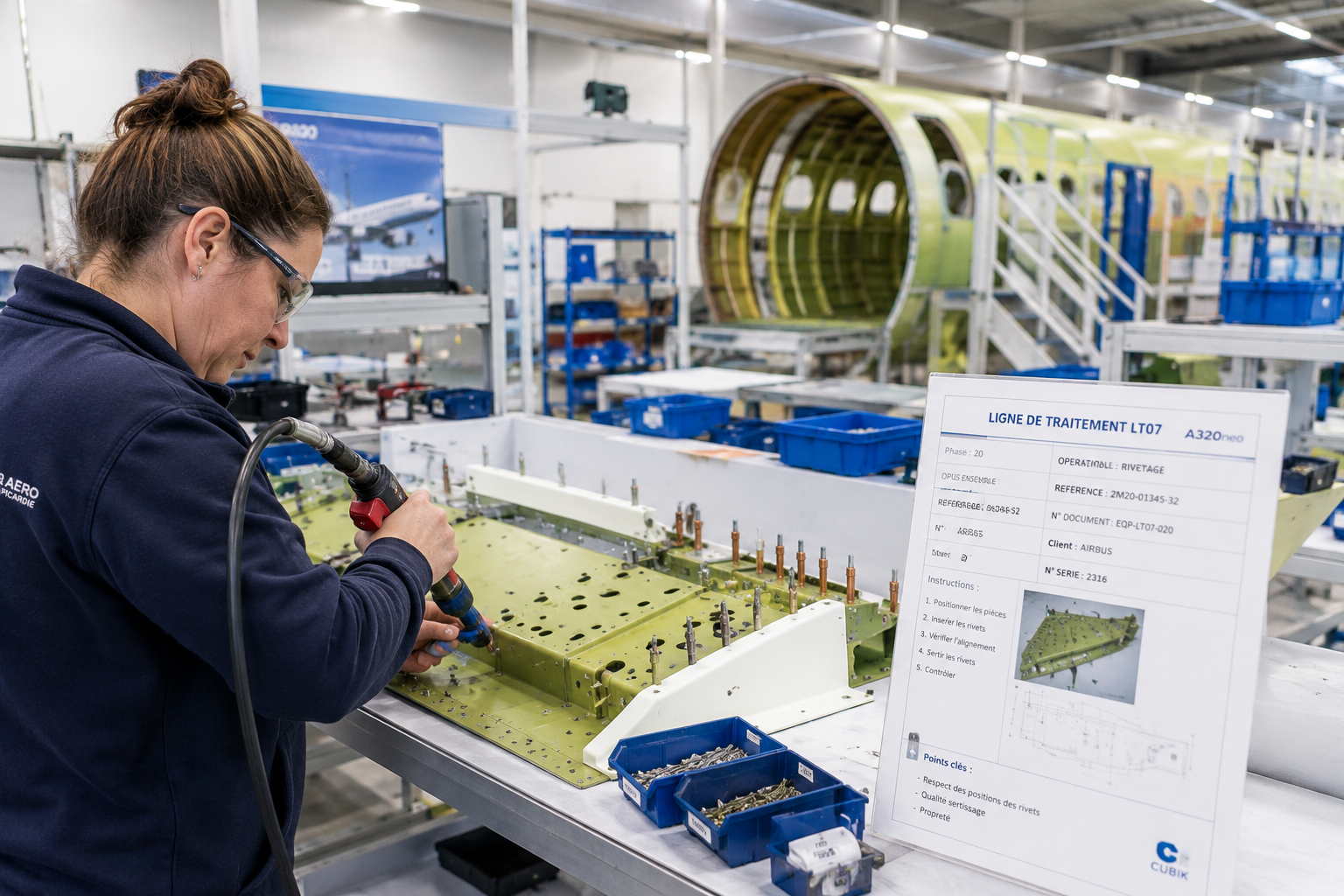

A 25% increase in productivity on processing lines thanks to Lean initiatives led by trained teams.

USE CASES
Train and support managers and operational teams in Lean projects, measurable results, and a culture of sustainable continuous improvement.
As the demands placed on aerospace subcontractors continue to rise, surface treatment companies must both ensure quality and optimize their processes to meet growing volumes. To achieve this, a comprehensive and structured approach—combining training, support, and Lean initiatives on the shop floor—has proven particularly effective.
A Challenging and Rapidly Growing Environment
In the aerospace industry, there is constant pressure to meet deadlines and maintain quality. Teams must manage high production volumes while maintaining a high level of precision and finish. The challenge: processing a growing number of parts and aircraft while reducing nonconformities and improving productivity.
The Approach
To transform practices and foster a culture of continuous improvement, the approach is structured around three levels of training and support:
-
Yellow Belt training for team leaders, combined with on-the-job coaching, enabling them to launch local Lean initiatives and solve day-to-day problems.
-
Green Belt training, with ongoing support for projects through the certification process, to ensure that improvement initiatives deliver measurable and sustainable results.
-
Training and mentoring of a Black Belt responsible for the strategic rollout of Lean across the entire company, ensuring that actions are aligned with operational and financial objectives.
The results obtained
This approach has yielded tangible and sustainable results:
-
10 successful Green Belt projects per year, with savings ranging from 20,000 to 140,000 € per project, validated by management control. These projects include, in particular,optimizing masking phases, improving the quality of sealing, and reducing material waste.
-
A 25% increase in productivity on surface treatment lines by effectively addressing quality issues and improving operational workflows.
A Sustainable and Shared Lean Culture
Beyond the financial and operational benefits, this approach helps to:
-
Involve operational teams in continuous improvement.
-
Embed a Lean culture throughout the organization, from senior management to frontline teams.
-
Ensure the sustainability of initiatives through standards and rigorous project monitoring.
By combining training, support, and strategic deployment, it is possible to effectively meet the growing demand from aerospace subcontractors, while improving quality, productivity, and employee satisfaction.