
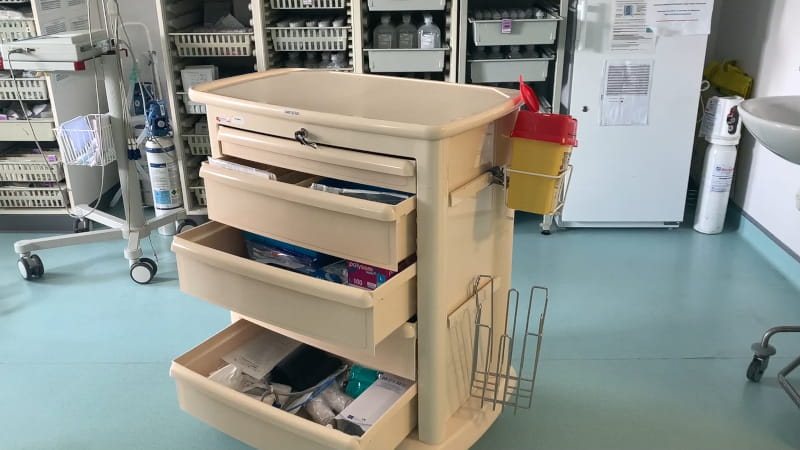

Secure care processes achieved by reducing equipment shortages and standardizing practices.

EXPERTISE
5S: A Key Tool for Ensuring the Smooth Flow of Work and Reducing Disruptions in Healthcare Services.
In hospital departments, equipment shortages can have a direct impact on the quality of care and patient safety. Implementing a 5S approach is a powerful tool for minimizing these disruptions and ensuring smooth, reliable patient care. Based on organization, collective discipline, and visualization, this method helps restore a stable workflow and improve the overall performance of teams.
1. Identify a pilot team
The first step is to select a group of motivated professionals who are committed to standardization and organization. This pilot team becomes the driving force behind the initiative, testing best practices and serving as a model for the rest of the department.
2. Define a priority flow
For the 5S approach to have a tangible impact, it is essential to target a process that is particularly prone to disruptions. This allows efforts to be focused on a relevant area and enables quick measurement of initial results.
3. Choose a pilot reserve
A specific area, related to the priority flow’s equipment, has been selected for the pilot project. It is in this space that all stages of the 5S process will be tested and validated with the pilot team.
4. Implement the 5S method in the pilot warehouse
-
Get rid of what you don’t need: dispose of equipment that is outdated, obsolete, or rarely used.
-
Organize: Arrange storage based on ergonomics and usage, possibly by creating kits tailored to recurring tasks.
-
Shine: Ensure regular cleaning in accordance with health protocols.
-
Standardize: Clearly define the location of each item using color-coding, photos, or designated containers, chosen collectively.
-
Follow up: Incorporate standard compliance checks into the team’s routines through audits, training sessions, and weekly meetings.
Each step must be developed collaboratively and approved by the team, ensuring ownership of and the sustainability of the process.
5. Optimize Replenishment
To take this a step further, analyzing consumption patterns and lead times makes it possible to implement a Kanban replenishment system in collaboration with suppliers. The use of complementary tools, such as the spaghetti diagram, also helps optimize travel and improve service flow.
6. Extend the approach to the entire department
Once the pilot program has stabilized, the rollout can be expanded to the entire department. Regular stand-up meetings and targeted metrics—action completion rates, space freed up, and out-of-stock rates—make it possible to track progress and adjust practices.
An often-overlooked but valuable tip: take photos of the initial state and the intermediate steps to visualize progress and highlight the work accomplished by the team.