
THE EXPERT’S EYE
“The Expert’s Eye” is our series of interviews that gives a voice to specialists in the field. This time, Michel Villeneuve, an agricultural engineer specializing in tropical agriculture in Africa and a Senior Advisor at Cubik, explains how to make a sustainable agricultural project a success on the continent.
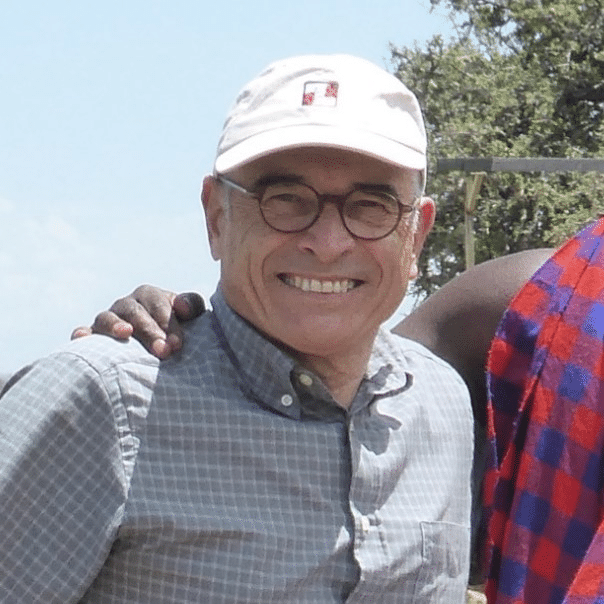
Michel Villeneuve, Agricultural Engineer and Senior Advisor at Cubik
What has Michel Villeneuve’s career path been like as an agricultural engineer in Africa?
I am an agricultural engineer specializing in tropical agronomy.
I have spent 34 years working in plant pathology—that is, the study and protection of plants against diseases. I have held a wide variety of positions. I started in research and development, moved on to field development, and ended up in sales as the Africa manager for a multinational company. In total, I spent 25 years in Africa. Those years gave me firsthand knowledge of crops, farmers, and on-the-ground realities in many countries.
Since 2013, I have been an independent consultant through my firm, BIOGECROP. I specialize in Africa and the Middle East, focusing on plant protection and nutrition.
What agronomic expertise do you bring to agricultural projects in Africa?
I provide technical expertise on crop production in Africa. I’m involved in all the key stages: selecting species and varieties suited to the local context, developing crop protection strategies, and ensuring proper plant nutrition. In an agricultural project, this is often where everything hinges. The wrong variety or the wrong technical approach can jeopardize the entire investment.
I also provide Cubik with access to an extensive network of partners specializing in agriculture in Africa. After so many years on the continent, I know many key contacts in the field: technicians, distributors, operators, producers… This network allows us to move quickly and rely on trusted partners in every country.
In three words, how would you describe Cubik?
- Agility: The team knows how to adapt quickly to a wide variety of contexts, countries, and requirements.
- Technical and Financial Expertise: Cubik combines agronomic expertise with economic and financial analysis. This is essential for ensuring the viability of an agricultural project.
- Achieving Objectives: Projects are carried out with rigor, and the goal is always to deliver concrete results to the client.
What do you like about working with our team?
First, the team’s youth. It’s inspiring to work with dynamic, curious, and motivated people.
Second, our skills complement each other. I bring my hands-on experience and technical knowledge of African cultures. The Cubik team brings different perspectives, particularly on strategy and financial modeling. This partnership works very well and allows us to tackle projects holistically.
Is there a particular mission that left a lasting impression on you?
The first thing that comes to mind is the mission in Ethiopia, which I led with Josep. It was a very inspiring project in a country with significant agricultural potential, where we had to conduct a practical assessment of the possibilities for expanding production.
Right now, I’m working on an assignment in northern Côte d’Ivoire, which is also very exciting. These are projects where we feel that our work can have a real impact on a region’s agricultural development.
In your opinion, what are the major challenges to achieving more sustainable agriculture in Africa?
1. Win over the stakeholders
This is the first challenge, particularly in Africa, where the goals for creating value in agriculture tend to be rather short-term, as people too often seek a quick return on investment.
2. Preserve agricultural capital.
The pursuit of a quick return on investment sometimes comes at the expense of soil fertility, crop health, or the long-term viability of the farm.
3. Share the models that work
Some large corporations (bananas, pineapples, grains, horticulture, etc.) have a long-term vision. They demonstrate that sustainable and profitable agriculture is possible. The challenge, therefore, is to widely disseminate this approach to other stakeholders in the sector.
Do you know of a project or success story in the agricultural sector that deserves to be shared?
I’m thinking of several private investors who have built farms from the ground up in the middle of nowhere—in Tanzania, Malawi, Zambia, Senegal, Kenya… They started from scratch, often in remote areas, and built successful farms.
What they all have in common is that, in every case, these are very well-managed private investments. These success stories showthat with a clear vision, strong technical expertise, and rigorous management, it’s possible to achieve great things in agriculture in Africa.
What advice would you give to a company looking to establish a supply chain or develop an agricultural project?
- Surround yourself with competent experts. An agricultural project requires a wide range of expertise (agronomy, crop protection, nutrition, economics, logistics, etc.). You need to rely on people who know the field.
- Set achievable and profitable short-, medium-, and long-termgoals, having clearly identified your market, whether it’s for export or the domestic market.
- Never neglect human resources management. This is a fundamental point. Without leadership and very rigorous organization, success is impossible, regardless of the project’s technical quality.
Any final thoughts?
Africa has immense agricultural potential, provided we approach it with dedication, patience, and the right expertise. I am pleased to be able to contribute, alongside Cubik, to projects that are moving in this direction.