
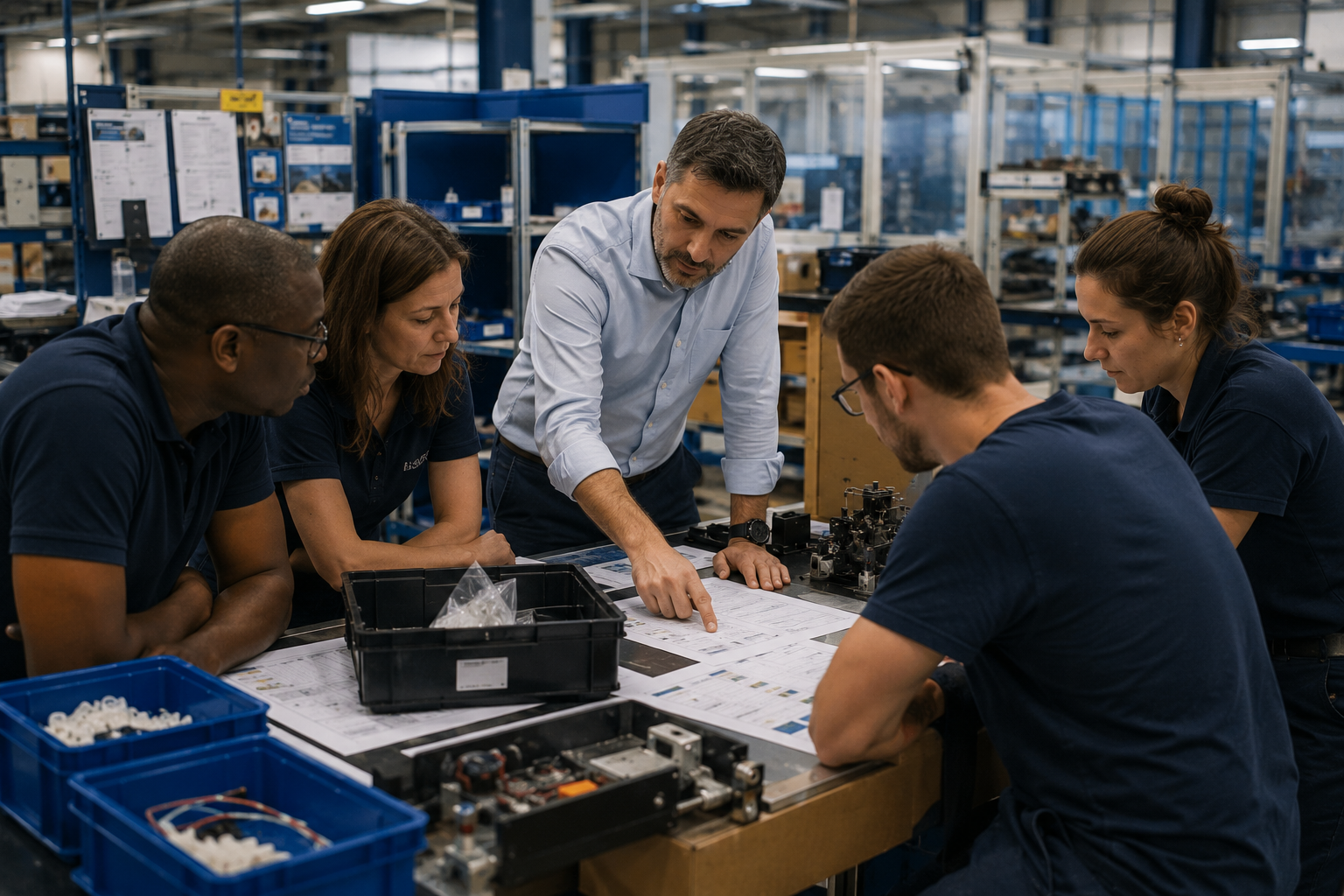

25 managers were trained and supported to streamline processes, implement key performance indicators, and improve project performance.

USE CASES
Optimize the performance of large-scale projects through a structured Operational Management System.
In a context of strong growth and an increasing number of large-scale projects, it is essential for engineering firms to clarify their processes, engage their teams, and implement effective operational management. Developing an Operational Management System (OMS) helps prepare the organization to successfully complete current projects while also preparing for future challenges.
Project Objectives
Over the years, some companies have seen their businesses grow rapidly, winning several major construction and infrastructure projects, including subway lines and airport express connections. This growth requires restructuring operations to ensure the success of large-scale projects and to capitalize on their expertise before new projects come on board.
The goal is twofold:
-
Ensure the success of ongoing projects through clear and effective management.
-
Prepare for the post-major-project phase by establishing a culture of operational management and a robust system of performance metrics.
The Approach
The implementation of the SMO involves several key steps:
1. Clarification of Processes
Teams receive support to map and understand existing processes, using the SIPOC method (Suppliers, Inputs, Process, Outputs, Customers). This approach makes it easy to visualize the organization and the interactions between activities.
2. Involvement of project managers
Program managers and project leaders are actively involved in the process to take a step back and assess their activities, identify bottlenecks, and develop their skills in process mapping and indicator management.
3. Capitalization of Key Elements
Operational challenges and key performance indicators are identified and used to establish an effective management system that incorporates:
- Visual Management (dashboards, KPI tree)
- Reliable performance metrics for each key process
4. Implementation of management tools
A control room (Obeya) has been established to monitor all of the company’s processes, enabling regular monitoring and optimal project coordination.
The results obtained
The initiative has yielded measurable and sustainable results:
-
Project managers have been trained in Lean methodologies and SMO.
-
25 business unit managers received support to improve key processes and implement the associated performance metrics.
-
The Obeya control room provides a consolidated, visual overview of operations.
-
All standards, procedures, and operating guidelines have been reviewed to ensure consistency and greater clarity in our processes.
Thanks to this Operational Management System, the company now hasa solid foundation for successfully completing its current projects and tackling future initiatives with efficiency and confidence, while fostering a culture of performance shared by all teams.