
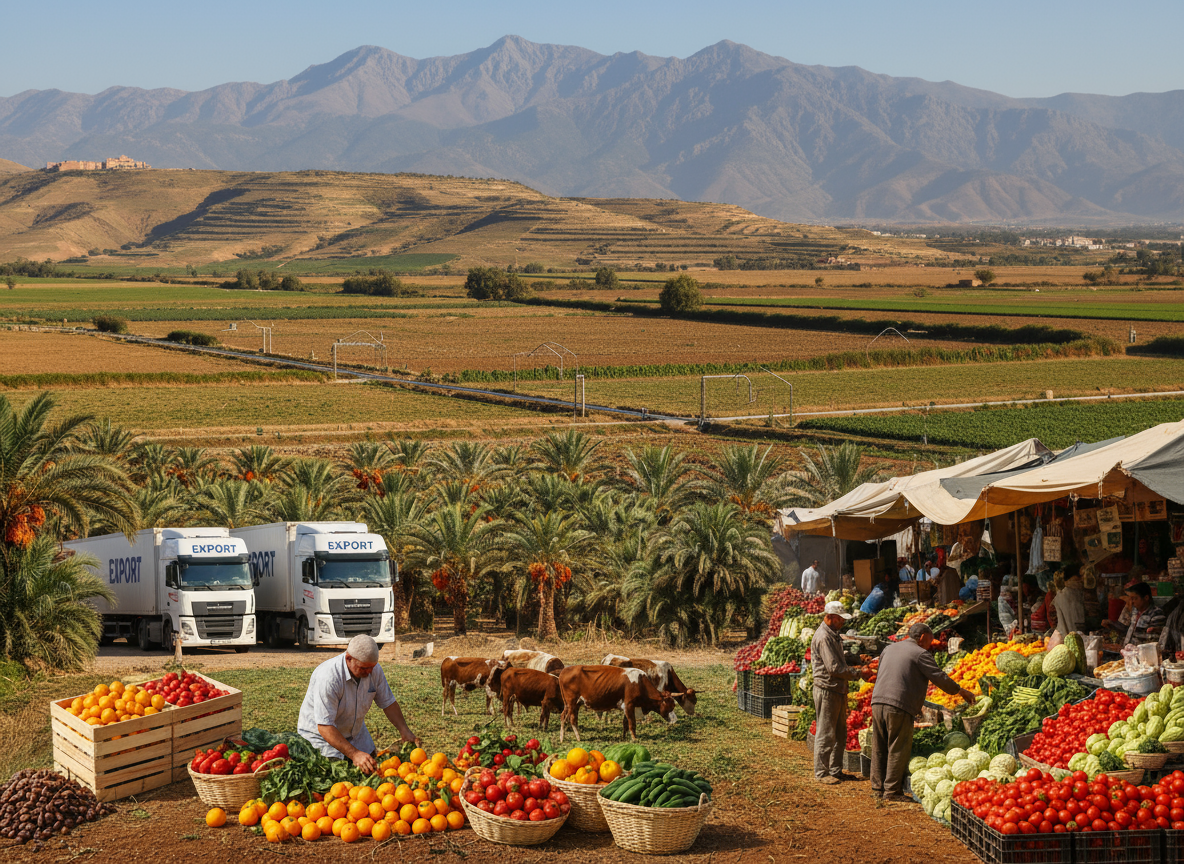

+8.6% annual growth in agricultural exports: a potential to be harnessed for the development of local agricultural sectors.

EXPERTISE
North Africa: Between Agricultural Exports and the Development of Local Supply Chains.
For more than a decade, North Africa has seen sustained growth in its agricultural exports, with an annual average of +8.6% between 2012 and 2023, driven by sectors such as fruits, vegetables, and dates. This momentum ranks the region among the continent’s top performers, even though its share remains modest on a global scale, far behind major export hubs such as Asia and Latin America.
Food sovereignty and local supply chains:
While this export momentum generates significant revenue and boosts the competitiveness of certain sectors, it does not automatically translate into an improvement in food sovereignty. Staple foods sometimes remain difficult to access, and the dietary diversity of local populations is not necessarily enhanced as a result.
That is why the development of local supply chains is becoming crucial: they ensure domestic supply, create local value added, support rural employment, and strengthen social stability. Against the backdrop of climate change and increased pressure on natural resources (water, soil, biodiversity), strengthening these sectors is now seen as a major strategic challenge for the region's agricultural future.
Building effective local supply chains:
Given this reality, it is clear that the development of efficient local supply chains is crucial to achieving North Africa's food sovereignty goals.
It is precisely in this context that our efforts take on their full meaning, as we work alongside local stakeholders to build resilient, sustainable, and value-generating value chains.
To give a concrete example of our work in the field:
- Together with Danone, we have strengthened local dairy production by ensuring a supply of high-quality, efficient, and environmentally sustainable feed, thereby directly contributing to the resilience of hundreds of farms across all their production regions in North Africa and to the long-term sustainability of the industry.
- In the Moroccan Atlas Mountains, we supported a project to enhance the value of agricultural land by designing development scenarios that combine crops intended for both the local market and export, thereby promoting value creation, technical and economic viability, and the sustainable development of farms
We have a presence in several key countries in the region: Morocco, Tunisia, Egypt… with projects tailored to the specific contexts of each country.
These issues directly affect stakeholders in the agri-food sector, investors, and institutions seeking to secure their supply chains while developing strong and self-sufficient local supply chains.