
12 quick wins and 4 improvement projects have been identified to deliver rapid results!

USE CASES
Observe, understand, and improve on-site operations to enhance team effectiveness and autonomy.
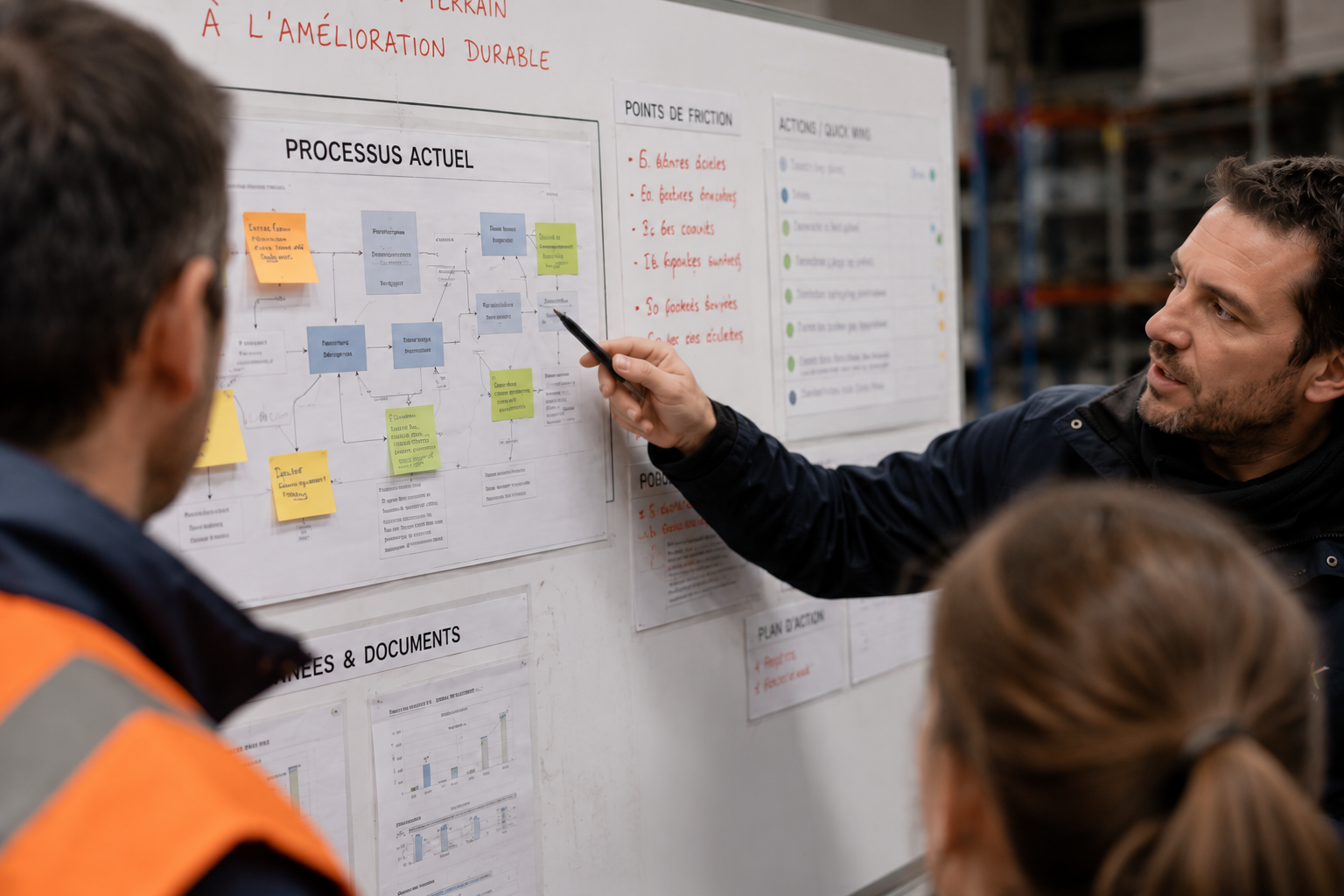
In a context where understanding the front lines is essential to securing key processes, some organizations choose to implement continuous improvement initiatives centered on Gemba—the direct observation of activities. The goal is twofold: to identify recurring pain points and rethink practices based on real-world observations, while strengthening teams’ skills to ensure the sustainability of these improvements.
Two recurring issues were identified:
- The reliability and up-to-date status of authorized partners.
- Collecting and managing copies of essential documents (such as vehicle registration certificates).
Although distinct, these issues reflect the same goal: to clarify roles, ensure data reliability, and improve service quality, compliance, and operational efficiency.
Project Objectives
The project’s success hinged on two key areas:
- Clarify the actual situation by identifying the root causes and defining a clear plan of action: who does what, when, and how.
- Demonstrate the effectiveness of the Gemba approach and train teams to implement it in their own departments.
The Process: A Five-Step Approach
1 – Framing
- Defining the scope and preparing the relevant teams.
- Explanation of the purpose of the Gemba approach to ensure participants are on the same page.
2 – Training and Awareness
- Introducing participants to the Gemba mindset and the approach to take on the shop floor.
3 – Field Observation
- Mapping of actual activities.
- Identifying workflows, pain points, and areas for improvement through targeted questions and on-site analysis.
4 – Collaborative Development of the Target Process
- Preparation of a report on surprising findings.
- Development of an action plan to achieve the defined objectives.
- Collaborative work with stakeholders to formalize the target process.
5 – Feedback and Follow-up
- Share findings at the end of the day for immediate feedback.
- Follow-up after the action plan has been implemented to ensure that the improvements are sustained.
The results obtained
- 13 activities reviewed and approved by their supervisors.
- Each pilot now has a clear understanding of their work and customer requirements.
- The constraints shared across departments have been identified and escalated to the appropriate level.
- 4 key challenges resolved, such as prioritizing and scheduling outage notices.
- 12 quick wins and 4 progress projects (“FAP”) identified to deliver rapid results.
- The ROTI (Return on Training Investment) score rose from 3.2 → 3.3 → 3.4 to 3.8 out of 4 across the four workshops, reflecting growing participant satisfaction.